Introduction
In the rapidly evolving manufacturing landscape of 2026, the demand for precision, automation, and energy efficiency has never been higher. Whether you produce electric motors, transformers, inductors, or automotive coils, the winding machine is the heart of your production line.
Choosing the wrong machine can lead to material waste, inconsistent coil quality, and costly downtime. Conversely, the right machine boosts throughput by up to 40% while reducing copper waste.
This guide breaks down the 7 critical factors you need to consider before making a purchase in 2026.
1. Understand Your Application & Coil Type
Before analyzing specs, define exactly what you need to produce. Winding machines are not one-size-fits-all.
| Coil Type | Recommended Machine | Typical Industry |
|---|---|---|
| Toroidal Coils | Toroidal winding machine (ring core) | Current transformers, medical devices |
| Transformer Coils | Foil or strip winding machine | Power distribution, renewables |
| Electric Motor Stators | Needle winding or internal winding machine | EV motors, home appliances |
| Solenoids / Relays | High-speed flyer winding machine | Automation, automotive |
| Inductors / Chokes | Automatic winding with tape wrapping | Consumer electronics, power supplies |
Pro Tip for 2026: Look for quick-change tooling systems. With supply chains demanding smaller batch sizes (mass customization), reducing changeover time from 60 minutes to 5 minutes is a game-changer.
2. Evaluate Automation Levels (Manual vs. Semi vs. Fully-Automatic)
Your labor costs and production volume dictate automation.
- Manual Winding Machines: Best for R&D labs or low-volume custom coils. Low entry cost but high labor dependency.
- Semi-Automatic (CNC): Ideal for mid-volume production (1,000–10,000 units/day). Operators load cores; the machine winds automatically.
- Fully-Automatic (Robotic): Mandatory for high-volume 2026 factories. Includes auto-loading, auto-cutting, auto-taping, and conveyor integration.
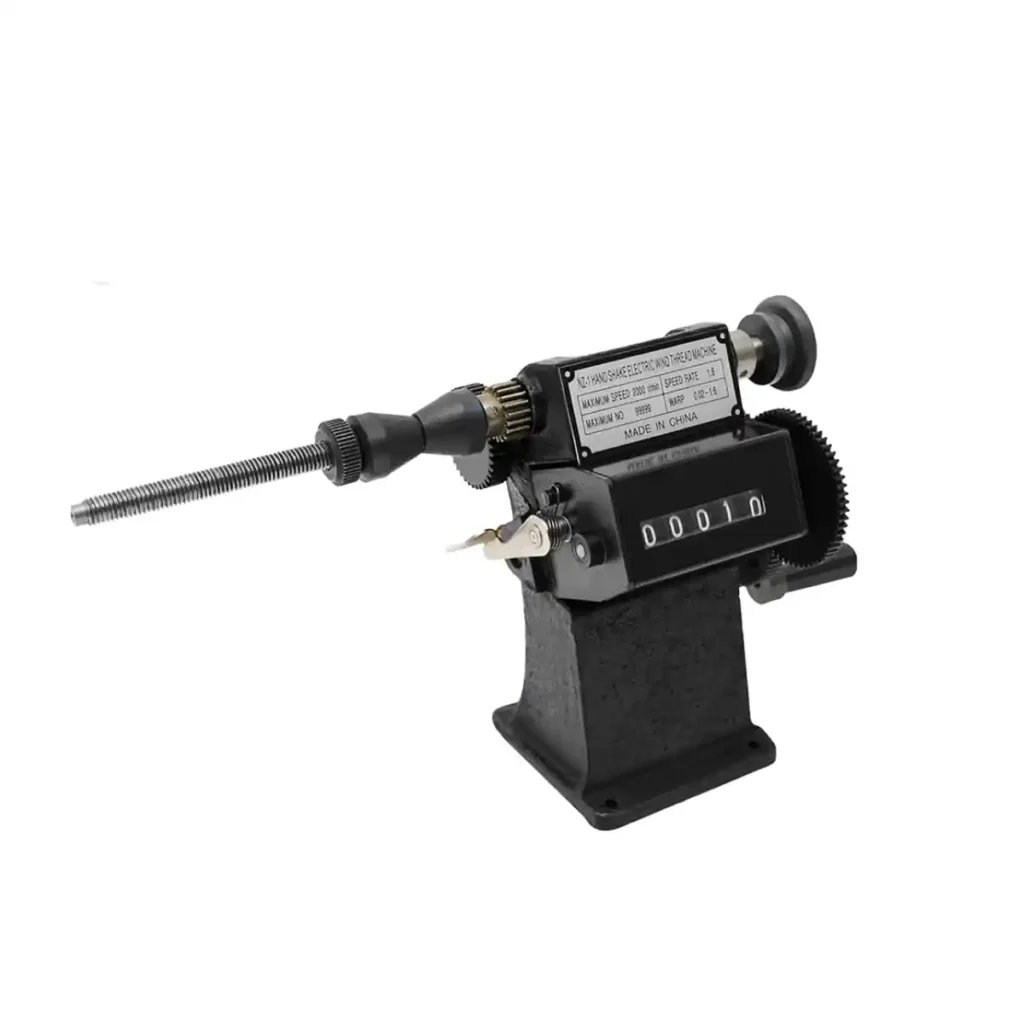
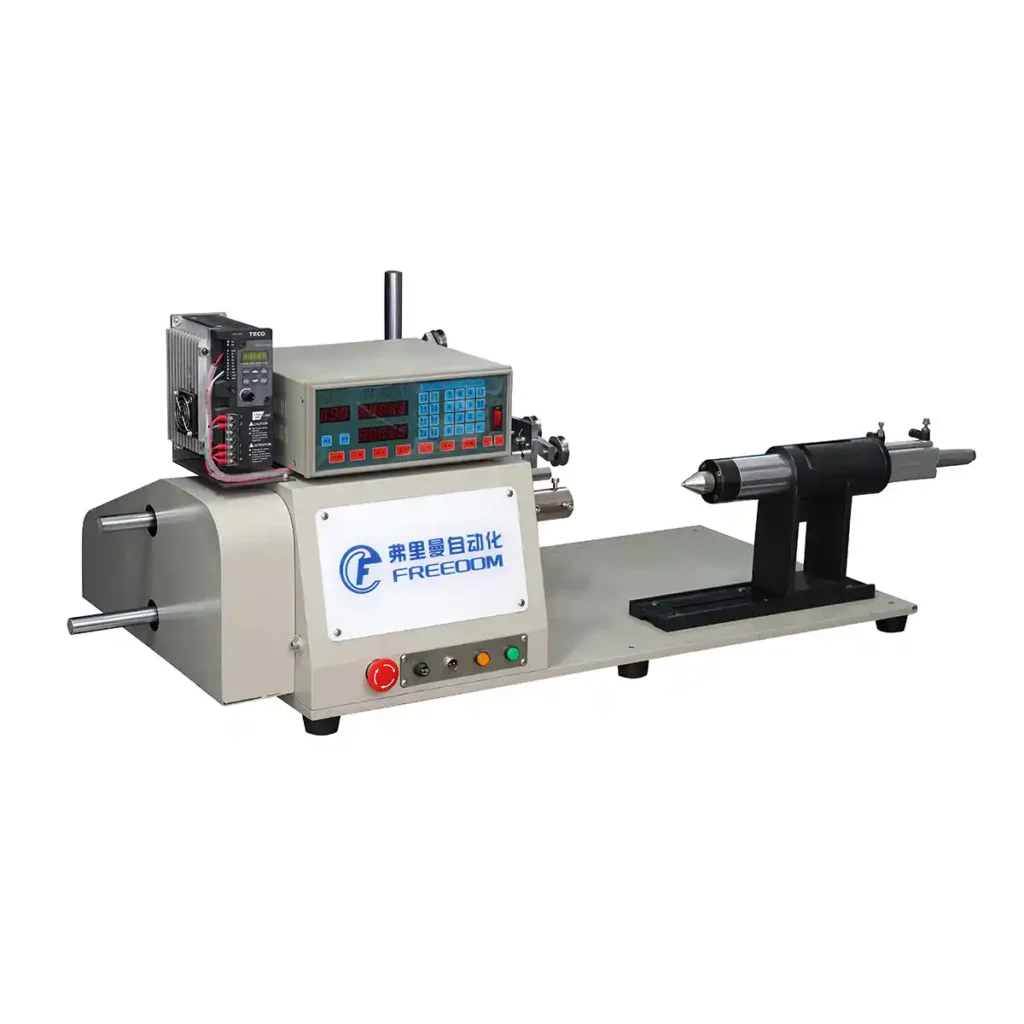
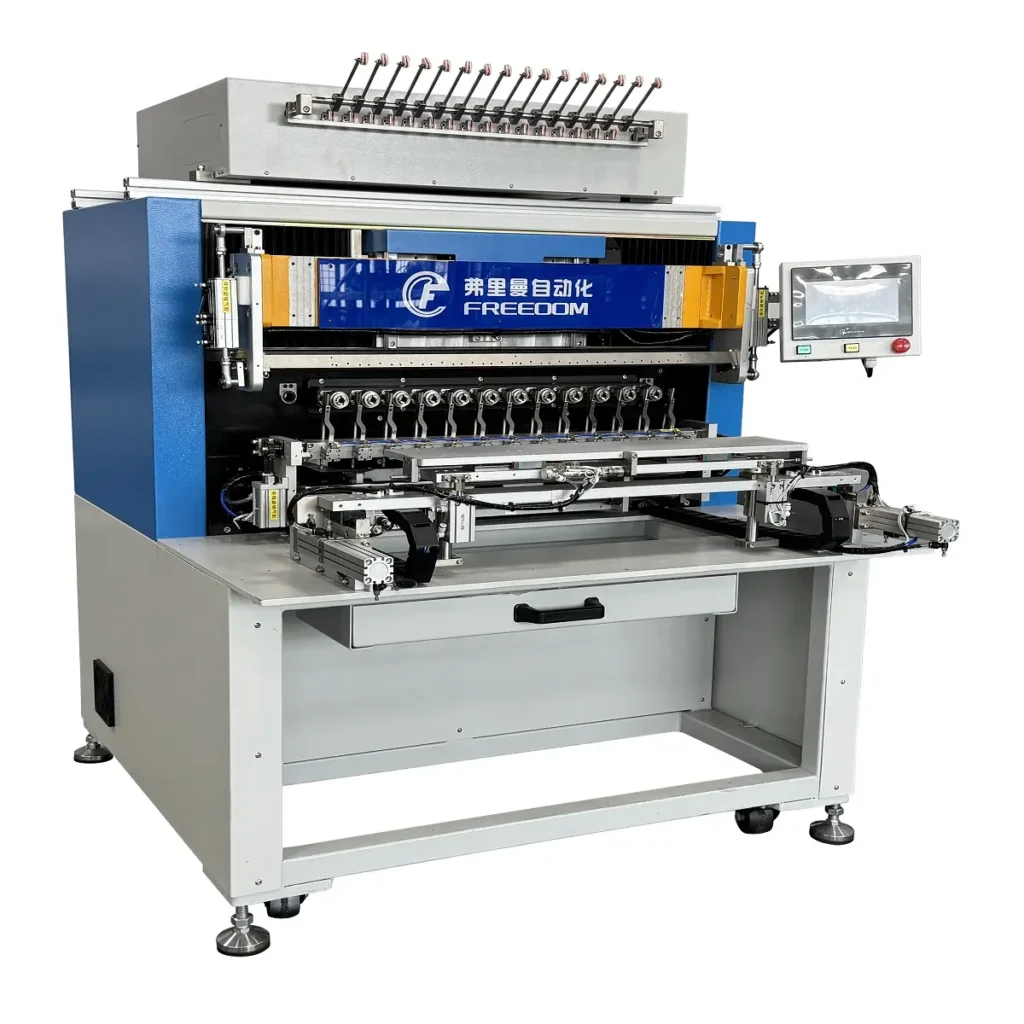
2026 Insight: With global labor shortages, the ROI on fully-automatic machines has dropped below 18 months for most medium-to-large factories.
3. Critical Technical Specifications of Winding Machine to Compare
Don’t get distracted by flashy dashboards. Focus on these core mechanical specs:
A) Spindle Speed (RPM) of Winding Machine
- Low speed (<3,000 RPM): Heavy gauge wire (AWG 10+), foil winding.
- High speed (6,000–12,000 RPM): Fine wire (AWG 28–44) for small coils.
- Ultra-high speed (>15,000 RPM): Smartphone haptics and micro motors. Requires dynamic balancing.
B) Wire Tension Control (The #1 Failure Point)
Poor tension causes broken wires or loose coils. For 2026, servo-controlled electronic tensioners are non-negotiable. Avoid mechanical friction pads—they drift over time and ruin consistency.
C) Pay-Off Stand Type
- Passive (Spool on pin): Cheap but irregular tension.
- Active (Motorized): Maintains back-tension regardless of spool diameter. Invest in active stands for aluminum wire (which is weaker than copper and breaks easily).
4. Software & Industry 4.0 Compatibility (2026 must-have) of the Winding Machine
The “Smart Factory” era is here. Your new winding machine must talk to your ERP or MES system.
Require these software features:
- Remote Diagnostics: The supplier can log in (with permission) to fix bugs without flying a technician across the ocean.
- Recipe Storage: Memory for at least 1,000 different coil programs.
- Data Export: USB or WiFi access to production counters, downtime, and wire consumption.
- Multi-Language Interface: Ensure English, Spanish, or your target market’s language is available.
Red Flag: A supplier who cannot provide a software API or data logging protocol in 2026 is selling obsolete technology.
5. Total Cost of Ownership (TCO) vs. Initial Price
Foreign trade buyers often focus only on the FOB price. This is a mistake. Calculate TCO over 5 years.
| Cost Factor | Cheap Machine ($8k) | Quality Machine ($25k) |
|---|---|---|
| Initial Price | $8,000 | $25,000 |
| Energy cost (5 yrs) | $6,000 (inefficient motors) | $2,000 (servo efficiency) |
| Downtime (repairs) | 15 days/year → $15,000 loss | 1 day/year → $1,000 loss |
| Scrap rate (wire waste) | 8% | 1.5% |
| 5-Year TCO | ~$29,000 | ~$28,000 |
The quality machine is cheaper in the long run. Always ask for the Mean Time Between Failures (MTBF) report.
6. Supplier Evaluation: Domestic vs. Overseas
For a foreign trade website buyer (likely importing from China, Germany, or Japan), vet the supplier rigorously.
Ask for:
- CE or UL Certification: Mandatory for safety in EU/US markets.
- Spare parts availability: Can they ship a new controller board within 72 hours?
- Video demonstration: A live video (not stock footage) of the exact model winding a coil similar to yours.
- Installation & Training: Do they offer remote VR training or on-site commissioning?
7. Future Trends Affecting Your 2026 Decision
The market is shifting. Ensure your machine can handle:
- Aluminum wire: Increasingly replacing copper due to cost volatility. Requires excellent tension control.
- Flat wire: Used in high-power EV chargers. Requires special straightening and winding heads.
- Recycled materials: Insulation on recycled wire is less uniform. Your tensioner must compensate automatically.
Conclusion & Next Steps
Choosing the right winding machine in 2026 is a strategic decision that impacts your quality, delivery speed, and profit margin.
Quick Decision Checklist for Choose the Winding Machine:
- Match machine type to your coil geometry.
- Prioritize servo tension control over speed ratings.
- Demand Industry 4.0 data compatibility.
- Calculate 5-year TCO, not just purchase price.
- Verify spare parts and remote support logistics.
Ready to upgrade your production line?
Browse Our Winding Machine Collection or Contact FREEMAN for a free line audit and coil sample test. We help you match the exact machine to your ROI goals.
