Solenoid Coils Industrial Applications
Solenoid coils are essential electromagnetic components that convert electrical energy into magnetic force to drive mechanical motion. Multiple solenoid coil designs exist, each engineered for distinct motion modes, power requirements, and industrial operating scenarios. The performance, durability, and efficiency of all solenoid actuators fundamentally depend on the quality and precision of their internal solenoid coils.
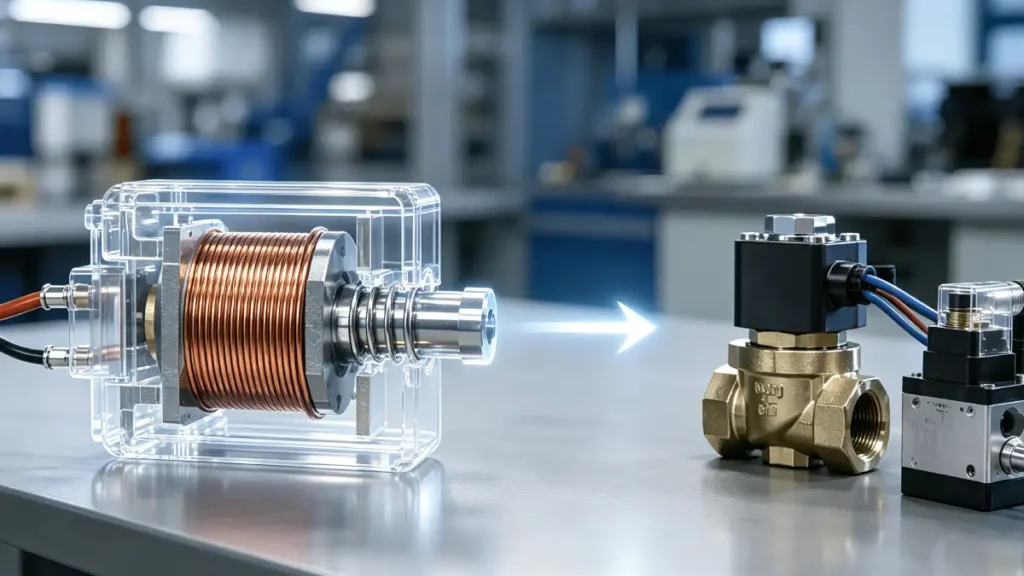
Types of Solenoid Coils
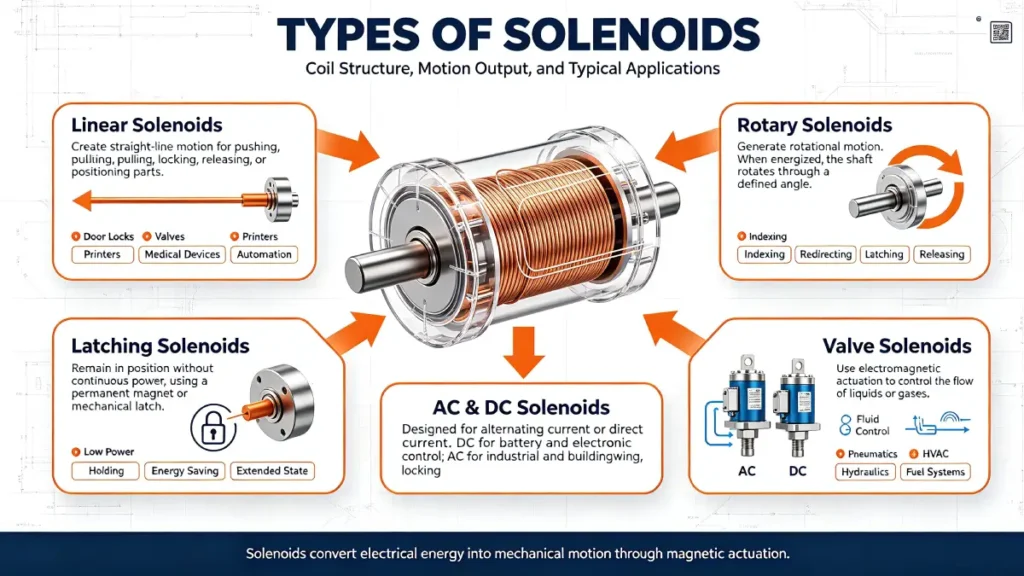
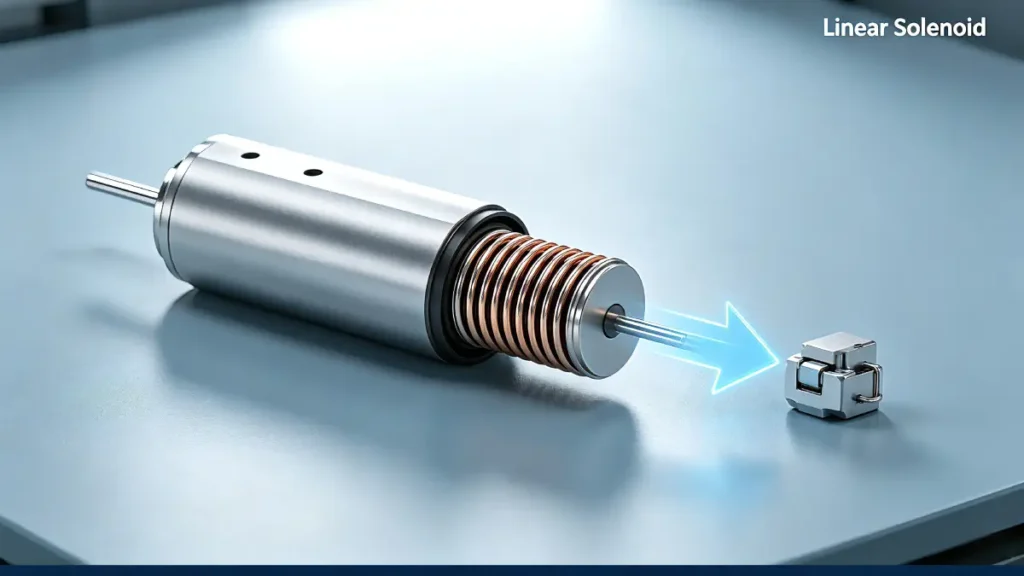
Linear Solenoid Coils
Linear solenoid coils are engineered to generate straight-line magnetic traction. As one of the most common coil types, they provide stable magnetic force to support pushing, pulling, locking, releasing, and precise positioning movements. These coils are widely applied in door locks, control valves, electronic switches, printers, medical devices, and general industrial automation systems. Consistent winding precision ensures reliable linear actuation and long service life.
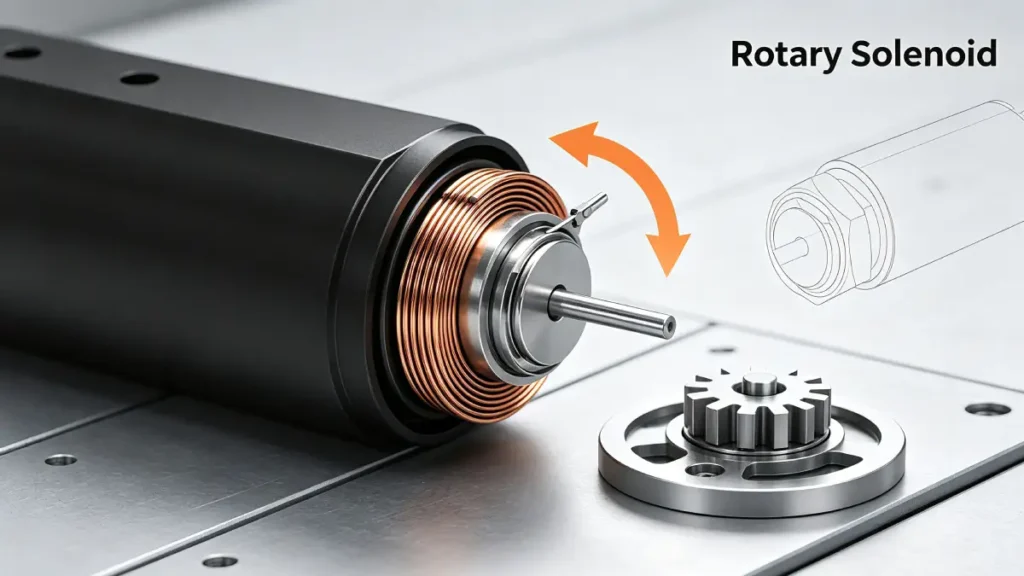
Rotary Solenoid Coils
Rotary solenoid coils are specially designed to produce rotational magnetic torque instead of linear pulling force. When energized, the customized coil structure drives shaft rotation within a fixed angle range. These coils are ideal for equipment that requires indexing, directional redirection, mechanical latching, and rotational release actions commonly found in precision automation mechanisms.
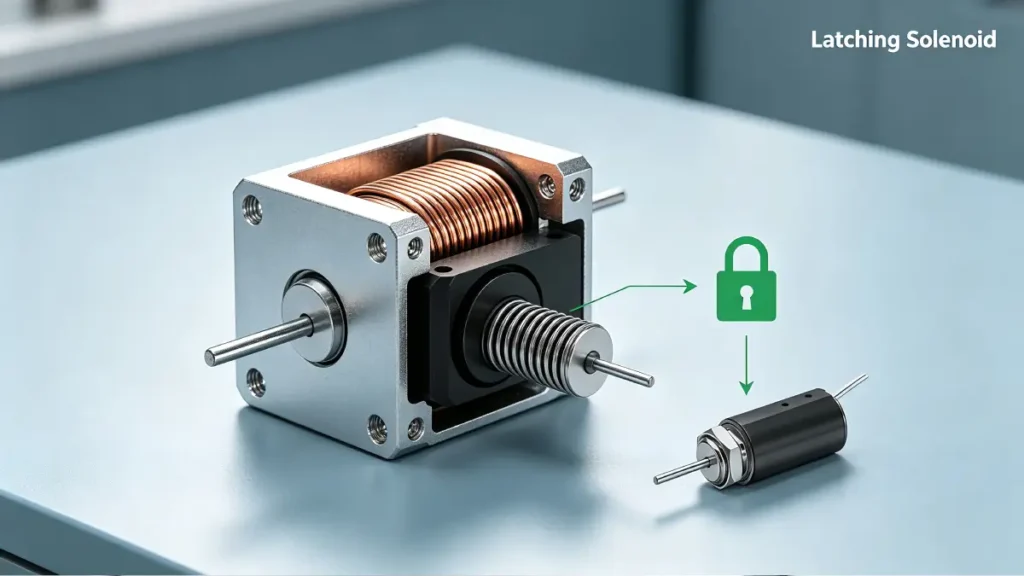
Latching Solenoid Coils
Latching solenoid coils are optimized for intermittent power operation. Working with permanent magnets or mechanical latch structures, these coils only require a short power pulse to complete actuation and maintain position without continuous power supply. This unique coil design greatly reduces power consumption and heat generation, making it perfect for long-duration holding applications and low-energy industrial systems.
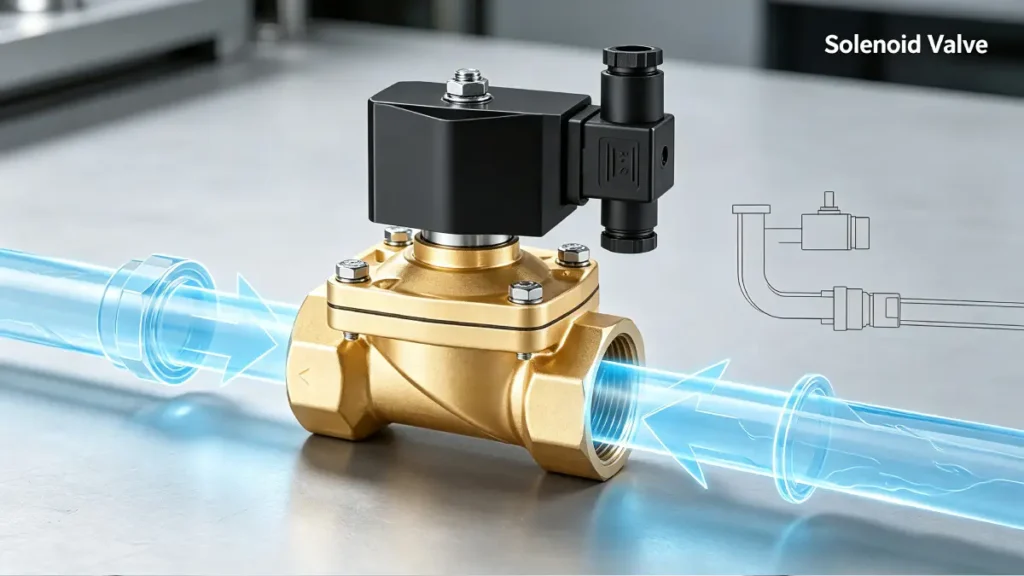
Solenoid Valve Coils
Solenoid valve coils are professional electromagnetic winding components dedicated to fluid control systems. They convert electric signals into magnetic actuation force to control the opening and closing of valves, managing the flow of liquids and gases. These coils are core parts of pneumatic equipment, hydraulic circuits, HVAC systems, fuel systems, irrigation devices, and process automation machinery, requiring stable insulation and high-temperature resistance.
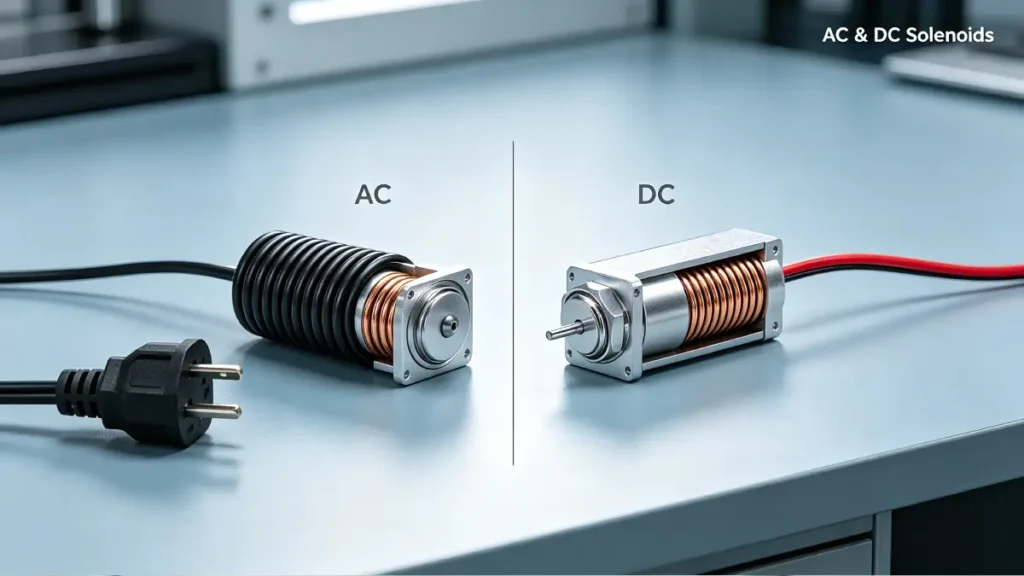
AC and DC Solenoid Coils
Solenoid coils are manufactured to match alternating current (AC) or direct current (DC) power systems. DC solenoid coils are widely used in battery-powered devices and precision electronic control systems, featuring stable output and low heat generation. AC solenoid coils are commonly adopted in industrial equipment and building infrastructure with commercial power supply. The selection of coil type depends on power supply conditions, performance standards, duty cycle, and actual application environment.
What Is a Solenoid?
Solenoids are high-performance electromechanical actuators designed to transform electrical power into accurate, controllable mechanical movement. A typical solenoid unit consists of a precision-wound copper coil, a movable ferromagnetic core, and a durable housing that stabilizes and guides internal motion. When electrical current passes through the coil, a controlled magnetic field is generated, driving the core to actuate. Thanks to their fast response, excellent repeatability, and long-term reliability, solenoids have become essential components in modern machinery, automation, and intelligent control systems.
Widely used in both daily consumer devices and high-end industrial machinery, solenoids perform core functions such as valve actuation, lock engagement, switch triggering, relay operation, and automotive component activation. They enable precise mechanical output without complex mechanical structures, acting as a key conversion unit that turns electronic control signals into physical motion.
For industries specializing in coil production, precision winding, automated assembly, and motion control, understanding solenoid operating principles is essential. A solenoid’s overall performance heavily relies on coil quality, winding accuracy, material specifications, electrical parameters, and mechanical structure. For OEM designers and automation engineers, solenoids offer efficient, cost-effective electromagnetic solutions for real-world motion control applications.
How a Solenoid Works
Solenoids operate based on fundamental electromagnetic principles. Each unit features a precisely wound cylindrical copper coil. When energized, the coil produces a concentrated magnetic field inside its core area, which attracts the ferromagnetic plunger and creates mechanical movement.
Depending on structural design, this magnetic actuation can perform pushing, pulling, latching, releasing, opening, closing, and positioning actions. Once the power supply is disconnected, the magnetic field disappears instantly. In most standard models, a return spring resets the plunger to its original position, preparing the solenoid for the next cycle.
The complete working process follows a clear cycle:
- Electric current flows into the wound coil
- The coil generates a stable magnetic field
- Magnetic force drives the plunger into motion
- Mechanical movement is produced for equipment operation
- Power shutdown eliminates the magnetic field
- The spring mechanism resets the plunger for repeated use
Solenoid speed, output force, stroke distance, and duty cycle are determined by coil winding structure, input power, core material, internal air gap, housing design, and mechanical load conditions.
Main Components of a Solenoid
Despite diverse sizes and industrial designs, all standard solenoids consist of several essential core parts:
Coil
As the core functional component of every solenoid, the coil is produced by precisely winding insulated magnet wire onto a bobbin. Factors including wire thickness, winding turns, winding uniformity, insulation grade, and coil shape directly determine magnetic efficiency, output stability, and energy consumption. High-precision winding craftsmanship ensures consistent performance and extended service life under continuous cyclic operation.
Plunger / Core
The ferromagnetic plunger is the moving part that responds to the coil’s magnetic force. It connects to valves, latches, switches, and other mechanical parts to transmit driving force and realize automated motion control.
Housing
The outer housing protects the internal coil structure, guides plunger movement, and optimizes the magnetic circuit. Industrial-grade housings are built to withstand vibration, high temperatures, humidity, dust, and long-cycle mechanical wear in harsh working environments.
Return Spring
Most linear solenoids are equipped with return springs to restore the plunger’s position after power cut-off. Matching spring tension with solenoid magnetic force ensures stable actuation and accurate reset performance during repeated operation.
Electrical Terminals
Terminals serve as the power input interface for the solenoid coil. They support flexible connection methods including soldering, crimping, plug-in installation, and embedded assembly to adapt to different industrial equipment layouts.
Common Applications & Performance Characteristics of Solenoid Coils
Solenoid coils serve as the core electromagnetic driving component for all solenoid actuators. They convert basic electrical signals into stable magnetic force, enabling fast, precise, and repeatable mechanical movement. Thanks to their simple structure, flexible customization, and reliable cyclic performance, precision-wound solenoid coils are widely adopted across automotive, industrial automation, medical equipment, consumer appliances, and fluid control systems.
Automotive Industry Applications
Modern vehicles rely heavily on high-stability solenoid coils to support core driving and safety functions. Custom coil assemblies power starter actuation, transmission gear shifting, fuel injection modulation, and exhaust emission control systems. They also support electric door locks, trunk release mechanisms, and brake system actuation.
Automotive working environments demand extreme durability. Solenoid coils used in vehicles must resist continuous vibration, drastic temperature fluctuations, voltage fluctuation, and high-frequency cycling. Consistent winding precision and stable insulation performance ensure long-term operational safety and vehicle reliability.
Industrial Automation Applications
In automated production systems, solenoid coils act as key control units to drive pneumatic valves, mechanical clamps, material stoppers, sorting gates, and ejection structures. They respond instantly to commands from PLCs, sensors, and control modules, enabling highly efficient automated workflow execution.
Typical automation scenarios for precision solenoid coils include:
- Pneumatic and hydraulic actuation systems
- Automatic part sorting and material handling
- Assembly line and packaging machine control
- Product testing and inspection equipment
- Safety interlock and process switching mechanisms
Their compact size, ultra-fast response, and high repeatability make precision solenoid coils indispensable for modern high-speed automated machinery.
Medical Device Applications
Medical-grade solenoid coils are engineered for ultra-precise, clean, and stable actuation. They are widely integrated into fluid pumps, reagent dispensers, diagnostic instruments, oxygen supply systems, and laboratory automation devices. In medical scenarios, coil consistency, low heat generation, and stable output directly influence equipment accuracy and operational safety.
Consumer Appliance Applications
Most smart household appliances embed miniature solenoid coils to realize automatic control functions. Washing machines, dishwashers, coffee equipment, vending machines, office printers, and electric door locks all depend on solenoid coil-driven valves and actuators. These coils manage water flow control, mechanical reset, automatic locking, and internal component movement for daily-use devices.
Security & Access Control Applications
Solenoid coils provide reliable electromagnetic driving force for access control systems, including electric door strikes, safety locks, cabinet locks, and safe locking devices. Upon receiving electrical signals, the coil generates magnetic force to complete unlocking, latching, or reset actions, balancing security stability and quick response performance.
Fluid & Gas Control Applications
Solenoid valve coils are foundational components for fluid and gas regulation. They support automatic switching and flow adjustment for air, water, steam, hydraulic oil, fuel, refrigerant, and various industrial gases. Widely deployed in HVAC systems, irrigation equipment, chemical processing, water treatment, and fuel supply systems, these coils enable stable, automated fluid process management.
Core Advantages of High-Quality Solenoid Coils
Precision-manufactured solenoid coils dominate modern control industries due to their comprehensive technical advantages:
- Ultra-fast response speed for instant actuation
- Simple electrical signal control, easy system integration
- Compact, lightweight structure suitable for miniaturized equipment
- Highly repeatable cyclic motion performance
- Cost-effective and stable for mass production
- Strong compatibility with automated and intelligent systems
- Flexible customizable specifications for diverse scenarios
- Excellent environmental adaptability for complex working conditions
Solenoid coils can be flexibly triggered by sensors, timers, relays, and microcontrollers, making them applicable for both simple civilian devices and complex industrial automation systems.
Key Design & Selection Considerations
To avoid premature failure and performance instability, solenoid coil selection and design must match actual application scenarios. Improper specifications will lead to insufficient magnetic force, overheating burnout, or shortened service life.
Critical technical parameters for coil customization include:
- Required magnetic suction force and stroke range
- Matching voltage, current, and power rating
- Duty cycle and continuous working duration
- Heat resistance and insulation grade
- Response speed and positioning accuracy
- Installation structure and mechanical matching
- Waterproof, dustproof, and high-temperature resistance
- Operating noise standard and service life requirements
Engineers must also comprehensively evaluate system load, spring tension, friction, and assembly tolerance. Professional coil design and precise winding craftsmanship are essential for mission-critical industrial and high-volume manufacturing applications.
Automated Winding Technology: Guarantee for Solenoid Coil Quality
The overall performance of solenoid products is fundamentally determined by coil winding quality. Manual winding is only suitable for prototype and low-volume trial production. For mass industrial manufacturing, automated coil winding technology delivers consistent, high-precision, and scalable production results.
Automated winding equipment precisely controls every production detail:
- Stable winding speed and uniform wire tension
- Accurate layer arrangement and precise turn count
- Standardized terminal insertion and soldering
- Consistent wrapping and insulating treatment
- Strict electrical testing and finished product inspection
Automated manufacturing effectively reduces product inconsistency, improves production efficiency, lowers labor costs, and ensures every solenoid coil meets strict electrical stability and mechanical durability standards for industrial-grade applications.
